Circus SE: The Next Military Revolution Could Start in the Kitchen
The next revolution in military logistics could start in the kitchen, as autonomous AI-powered robotics move from
Press Release Disclaimer: This is a press release distributed through the XPR Media network. It has not been independently verified by our newsroom.
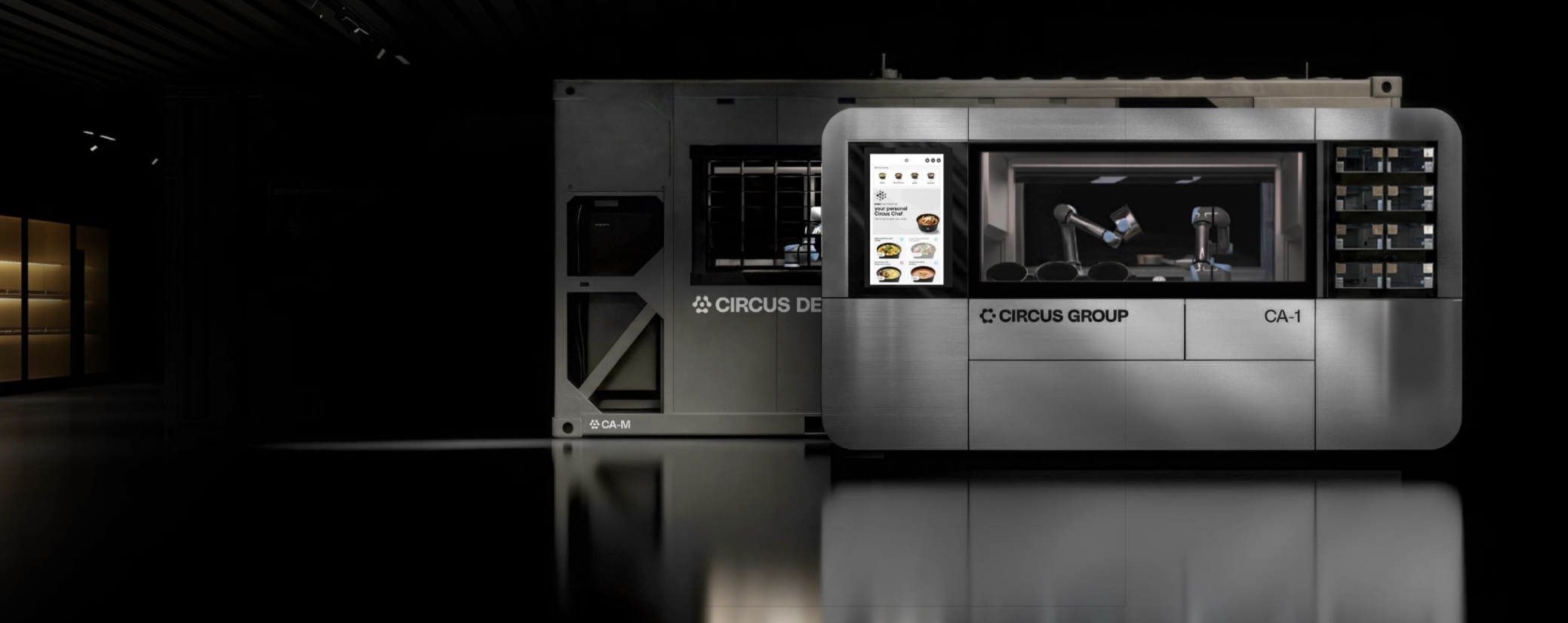

The next revolution in military logistics could start in the kitchen, as autonomous AI-powered robotics move from civilian food service to military supply.
Circus SE (XETR: CA1)
MüNCHEN, BAYERN, GERMANY, August 31, 2026 /EINPresswire.com/ — There is an unflattering nickname in the history of American military food: “Ham and Clay.” The term referred to the notorious cans of ham and lima beans served to U.S. troops during World War II and later in Vietnam. Soldiers found them dry, tough and so unappetizing that some reportedly passed the cans on unopened or simply buried them.
The story may sound amusing today. But it points to a problem that has remained largely unchanged for generations: An army can fight only as long as it can reliably sustain the people doing the fighting.
Behind weapons, vehicles and sensor networks lies a second, less visible infrastructure of transportation, storage, energy and food. It is often noticed only when it fails—and it becomes particularly critical when supply lines stretch, personnel are scarce and routes become dangerous.
This aspect of military logistics is beginning to change – not just because of better food, but because of robots.
One answer is being developed by Circus SE in Munich. The AI-technology company builds autonomous kitchen systems that process ingredients, prepare meals and manage their operations with limited human intervention. The technology was originally developed for supermarkets, corporate cafeterias and professional food service. Today, the same technological platform forms the basis of a growing dual-use portfolio: the CA-1 and CA-A are already operational in military environments, while the CA-M extends the platform into tactical military logistics.
What began as food-service automation is therefore evolving into a dual-use robotics platform.
From Kitchen Robot to Autonomous Kitchen
Circus was founded in 2021. Founder and CEO Nikolas Bullwinkel came out of the development of quick-commerce company Flink. The acquisition of Berlin-based robotics startup Aitme gave Circus an early technical foundation for autonomous kitchen systems.
The ambition was always greater than a robotic arm performing individual tasks normally handled by a cook. Circus set out to automate the kitchen as a whole.
The CA-1, now in its fourth generation, occupies roughly seven square meters. The system includes silos for up to 36 fresh ingredients, autonomous induction cooking systems, cleaning technology and heated serving compartments. A single refill is designed to produce more than 500 meals, with individual dishes prepared within minutes.
But the important part is not simply the number of meals. It is the architecture behind the machine.
Circus combines robotics, sensors, artificial intelligence and its proprietary CircusOS software platform into a system designed to minimize manual intervention.
That also changes the role of the human operator.
The cook increasingly becomes a supervisor.
For a civilian customer, that means automation and efficiency. For a military user, it can mean something more consequential: maintaining food supply even when personnel are limited or cannot safely be deployed everywhere they are needed.
When the Real World Refuses to Follow the Plan
The real technological challenge begins where pre-programmed processes are no longer enough.
A tomato falls differently than expected. An ingredient is a few inches away from where it should be. A temperature changes. A motor begins to vibrate unusually.
In a conventional automated production environment, many of these variables can be controlled. An autonomous machine, however, has to deal with them.
Circus calls its approach Embodied AI. CircusOS provides the platform layer, while sensors and cameras collect information from the physical environment and the software is designed to respond accordingly.
That matters particularly in military applications. A field kitchen is not a sterile production facility. It may be located at a military base, inside a container or in an environment where power, water and communications cannot be taken for granted.
The less predictable the environment, the more valuable it becomes for a machine to recognize changes and respond to them autonomously.
Circus is attempting to take that autonomy further with Agentic AI. In May 2025, the company acquired AI startup FullyAI. The concept is that an AI agent should not simply respond to an instruction, but pursue a goal and organize the individual steps required to achieve it.
For an autonomous kitchen, that could mean not merely reporting a malfunction, but detecting its early warning signs—for example, micro-vibrations indicating a mechanical problem or temperature deviations preceding a failure.
The robot becomes a system. The kitchen becomes a logistics process.
Autonomy Begins Where the Cloud Ends
For military applications, however, that is not enough. A system can be highly intelligent, but if it depends on a remote cloud connection to make its decisions, it loses part of its autonomy when that connection disappears.
Electronic warfare is a fundamental part of the modern battlefield in Ukraine. Communications can be disrupted, while GPS signals can be manipulated or blocked.
Circus is therefore pursuing local computing. In September 2025, the company became a European partner in Meta’s expansion of access to its Llama models for defense and security customers. The objective is to run AI functions directly on the hardware and reduce dependence on external infrastructure.
In a civilian setting, that is primarily a matter of operational resilience and data protection. In a military environment, it can determine whether the system keeps operating at all.
Taking the Kitchen to the Battlefield
The technology is already moving beyond individual applications. Circus has built an operational dual-use portfolio: the CA-1 is in use by the Bundeswehr, while the CA-A is operational in Ukraine. The CA-M represents the next step, extending the same technological foundation into more demanding tactical environments. Developed by Circus Defence SE, it is designed specifically for autonomous military food supply.
The goal is not to remove humans entirely from food supply. Instead, machines are intended to take over routine tasks while human personnel focus on situations that require judgment and decision-making. That idea is now being tested under real-world conditions.
The CA-A represents the second operational pillar of this dual-use portfolio and is already deployed in Ukraine. On July 16, 2026, Circus announced the start of live operations with the 3rd Army Corps of Ukraine’s Ground Forces in the Kyiv area — the first deployment of autonomous meal-supply robotics in an active conflict zone.
Before the launch, the system cleared certification by the State Service of Ukraine for Food Safety and Consumer Protection, confirming the health, quality, and safety requirements for importing the technology.
The scope is what makes it notable. The soldiers are supplied with the full Circus stack — hardware, AI-driven software, and the company’s proprietary ingredient infrastructure. This is not one robot on a trial pad; it is an integrated sustainment system under real conditions. The partnership rests on a framework agreement signed in December 2025 covering up to 25 autonomous systems.
A major from the 3rd Army Corps described the value in operational terms at the launch: the technology, he said, “doesn’t replace our catering forces; it complements them, closing the gaps where we couldn’t reach soldiers with nutritious food quickly enough.”
That is a fair description of what autonomous sustainment can plausibly deliver. The goal is not to remove humans from logistics. It is to extend the reach of the humans already there — to make the supply chain less dependent on a person performing every individual step.
For Circus, Ukraine is above all a proving ground. It is where the company finds out how much autonomy actually holds up, how much support the machines require, and where human intervention remains non-negotiable.
Together, CA-1, CA-A and CA-M illustrate the evolution of Circus’ dual-use strategy — from operational military applications to purpose-built tactical systems.
Germany Tests the Normal Case
Ukraine is the extreme case. Germany is the norm.
In January 2026, Circus Defense announced the delivery of AI-powered robots to the Bundeswehr. The CA-1 is being used at a German military base for autonomous food service, but with a different context.
Soldiers do not follow the cafeteria’s hours of operation. Training exercises can last late into the night, units may return at unusual times, and their needs do not necessarily follow a fixed daily schedule.
An autonomous kitchen can fill that gap, providing meals when conventional kitchen personnel are not on site.
The potential benefit is therefore less about replacing people than relieving them. That distinction matters. Military logistics does not become human-free. It becomes less dependent on people having to perform every routine process themselves.
NATO’s Eastern Flank as the Next Test
Then came Lithuania. On April 9, 2026, Circus announced that it had won a public tender from the Lithuanian armed forces for an autonomous supply robot in Vilnius. This marks the first deployment within the Baltic military infrastructure.
The location gives the project additional significance. Lithuania borders Belarus and sits directly alongside Russia’s Kaliningrad exclave, placing the technology on one of NATO’s most sensitive frontiers.
The system is intended to be integrated into existing military infrastructure and tested under operational and training conditions.
This results in three very different tests of the same technological foundation: Germany for controlled operations in barracks and on training grounds, Lithuania for integration into NATO structures, and Ukraine for deployment in an active military conflict.
If the system can operate reliably in all three environments, a standardized approach for other armed forces becomes conceivable.
The Next Test: America
The farther Circus moves beyond Germany, the more relevant the U.S. market becomes.
The company’s connection to the United States already exists on several levels. Technologically, Circus works with Meta and its Llama models. Militarily, its path now runs from European NATO countries to Ukraine. And since January 2026, it has also established a connection to U.S. capital markets.
Circus launched a sponsored Level-I American Depositary Receipt program. The ADRs trade on the U.S. over-the-counter market under the symbol CCUSY; each ADR represents one Circus ordinary share. The company’s primary listing remains on the German Stock Exchange, with BNY Mellon serving as the depositary.
The program makes Circus more accessible to American investors—and points toward a market with significant potential for autonomous robotics and defense technology.
But the more important question is what happens next.
The Real Test
Perhaps the real significance of Circus is not that a robot can cook.
It is what happens when an autonomous kitchen becomes a component of military logistics.
After all, sustainment is not a secondary task.
Nikolas Bullwinkel put the idea succinctly when he introduced the CA-M in April 2025: “In war and crisis, sustaining military personnel is just as critical as equipping them.”
That turns food supply into more than a cafeteria issue. It makes it part of military infrastructure.
For Circus, this is an attempt to develop a platform for autonomous systems—based on technology originally designed for civilian food supply—that also functions under military conditions, thereby integrating AI, robotics, logistics, and defense on a common technological foundation.
The opportunity is that experience from civilian operations can help improve the military technology. The risk runs in the opposite direction: physical AI is significantly harder to scale than software.
An algorithm can be copied almost indefinitely. A robot has to be manufactured, shipped, installed, maintained and operated. And it must function not only in controlled environments, but where real-world conditions challenge the assumptions built into the system every day.
Circus has already addressed part of the industrial scaling challenge. When presenting its high-volume production operation, Bullwinkel said: “This step proves that Circus can not only design breakthrough technology but also scale it to industrial production at the highest quality levels.”
For the defense market, however, the next test is only beginning.
Ultimately, the demonstration is not what matters. The operation does. Can the technology work reliably, economically and at meaningful scale?
That is where the Circus story could extend far beyond the kitchen.
The soldiers who once complained about “Ham and Clay” had a problem with the taste of their food. Modern armed forces face a different challenge: how to maintain supply when personnel are scarce, infrastructure is vulnerable and access to the people who need supplies is uncertain.
The answer may partly lie in greater autonomy. Circus starts with a meal. But behind that meal is a much larger proposition: keeping people reliably supplied when conventional logistics reach their limits.
The next revolution in military logistics may not begin with tanks or drones; it could start in the kitchen.
Elena Coles
Circus SE
email us here
Visit us on social media:
LinkedIn
Instagram
YouTube
X
Legal Disclaimer:
EIN Presswire provides this news content “as is” without warranty of any kind. We do not accept any responsibility or liability
for the accuracy, content, images, videos, licenses, completeness, legality, or reliability of the information contained in this
article. If you have any complaints or copyright issues related to this article, kindly contact the author above.

Media gallery