
From Specialty to Mainstream: Tandoor Morni Serves Rising Commercial Demand for Tandoori Ovens Across U.S. and Canada
EDISON, NJ / ACCESS Newswire / October 23, 2026 / For most of the past three decades, the clay tandoor sat in a narrow
Press Release Disclaimer: This is a press release distributed through the XPR Media network. It has not been independently verified by our newsroom.

EDISON, NJ / ACCESS Newswire / October 23, 2026 / For most of the past three decades, the clay tandoor sat in a narrow corner of the North American restaurant equipment market. It was a specialty purchase, bought almost entirely by Indian restaurants in a handful of large cities. That is changing quickly. As South Asian food moves into the mainstream, the oven behind naan, tandoori chicken and kebabs is showing up in a much wider range of commercial kitchens, and Tandoor Morni, a clay tandoor manufacturer that has been building ovens for North American kitchens since 1992, is positioning itself to serve that broader market.
The company supplies commercial, catering and home tandoors across the United States and Canada through showrooms in both countries and a factory-direct sales model.
A Niche Product Finds a Wider Market
The change starts with the food. Dishes that were once found mainly on Indian restaurant menus are now part of everyday eating. Butter chicken and tikka masala appear in grocery stores, naan is sold next to sandwich bread, and diners who grew up with these flavors treat them as familiar rather than exotic.
Restaurants have followed. Alongside traditional full-service Indian restaurants, the buyers for commercial tandoors now include fast-casual chains built around South Asian bowls and wraps, halal grill houses, Middle Eastern and Afghan kebab restaurants, hotel banquet kitchens, wedding and event caterers, and food truck operators. Some operators with no South Asian connection at all are adding a tandoor simply for what it does: it is one of the hottest and most versatile live-fire cooking tools a commercial kitchen can run.
“When we started, almost every customer was an Indian restaurant owner replacing an oven they already knew,” said Parvinder Aulakh, spokesperson for Tandoor Morni. “Today the calls come from fast-casual groups, caterers, hotels, food trucks and chefs who have never cooked in a tandoor before. The oven hasn’t changed. The market around it has, and it keeps getting wider every year.”
Why Operators Are Investing in the Oven
A tandoori oven earns its place in a commercial kitchen for practical reasons as much as culinary ones. The clay walls hold heat and radiate it back at temperatures of 800 to 900 degrees Fahrenheit, cooking food from every side at once. Bread pressed against the clay wall is ready in under a minute. Marinated meats, paneer and vegetables cook quickly on vertical skewers, charring on the outside while staying moist inside, and pick up the smoky flavor diners associate with the cuisine.
For operators, that means one station can produce the bread program, appetizers and a share of the main courses from a single footprint. Bread items in particular are among the most cost-effective items on a menu, and the oven turns them out continuously through a busy service. The tandoor serves vegetarian and non-vegetarian dishes in equal measure, which matters to restaurants feeding mixed groups of diners.
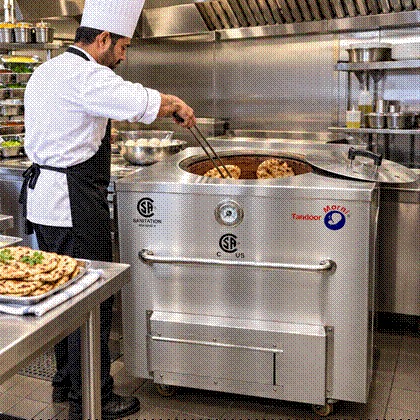
A chef pulls fresh naan from a certified Tandoor Morni stainless steel commercial tandoor during service in a restaurant kitchen.
There is a front-of-house benefit as well. Many restaurants now place the tandoor in an open kitchen or behind glass, where guests can watch naan being slapped onto the wall and skewers coming out of the fire. In a market where customers share what they see, the oven doubles as a draw in its own right.
Built for North American Kitchens
As the customer base has widened, so have the expectations placed on the equipment. Commercial kitchens in the United States and Canada must satisfy health inspectors, gas inspectors and insurers before they can open. A clay oven brought in without documentation can hold up an opening for weeks.
Tandoor Morni builds its ovens around authentic clay that is free from chemicals, finished by hand and housed in food-grade stainless steel bodies with commercial insulation. Its ovens carry CSA Sanitation NSF/ANSI 4 certification, the recognized sanitation standard for commercial food-service equipment, and the company states that it is the only tandoor oven manufacturer in North America to hold both that certification and CSA Z83.11 certification for gas-fired commercial equipment.
The company builds gas, charcoal and wood-fired tandoors. Gas models are the standard for indoor restaurant kitchens because they light quickly, hold an even temperature and install under North American codes like other commercial gas equipment. Charcoal and wood-fired models are typically used outdoors by caterers, patio programs and operators who want the deepest smoke.
Serving a Broader Range of Buyers
Different buyers need different ovens, and the company’s range reflects how the market has spread out. Full-service restaurants with high bread volume often run large-mouth commercial units, and some run two. Fast-casual operators look for consistent output and simple operation for staff with varied experience. Caterers and food truck operators favor portable models on heavy-duty wheels that can be set up on a lawn, in a banquet hall or in a truck kitchen. A growing number of home cooks are buying compact residential tandoors for their patios.
For commercial buyers, the questions that come up most are certification, fuel type, size and long-term support. The clay liner inside a tandoor seasons with use and eventually needs repair or replacement, so operators want to know where replacement clay, skewers, burner parts and accessories will come from. Tandoor Morni’s showrooms in the United States and Canada let buyers see the ovens in person, compare models and plan ventilation and clearances before installation. That conversation often starts with a set of kitchen drawings and ends with specifications a contractor can build around.
Operators researching Commercial Tandoor Ovens For Sale in the USA can compare the company’s commercial models by size, fuel and certification online before visiting a showroom or speaking with its team.
Looking Ahead
The direction of the market appears settled. South Asian cuisine continues to gain ground across North America, new restaurant concepts keep entering the category, and diners increasingly expect the real flavor that only a clay oven delivers. Each of those kitchens needs an oven that cooks the traditional way and meets modern commercial standards.
“The tandoor is no longer a specialty item that only a few restaurants understand,” Aulakh said. “It’s becoming standard equipment, and our job is to make sure every operator who buys one gets an oven that cooks the way it should and passes every inspection on opening day.”
About Tandoor Morni
Founded in 1992, Tandoor Morni manufactures clay tandoor ovens in gas, charcoal and wood-fired models for restaurants, hotels, caterers, food trucks and home cooks. The company serves customers across the United States and Canada through its showrooms and website.
Media Contact
Parvinder Aulakh,
Tandoor Morni
95 Mayfield Ave, Edison, NJ 08837
Phone: 727-251-6924 |
Email: info@tandoormorni.com
https://tandoormorni.com/
SOURCE: Tandoor Morni
View the original press release on ACCESS Newswire
