Sunrise Marine Center Urges Preseason Duck Boat Checks Before Arkansas Opener
With Arkansas duck season opening Nov. 21 and new AGFC boat-access rules, the Searcy dealership outlines boat selection
Press Release Disclaimer: This is a press release distributed through the XPR Media network. It has not been independently verified by our newsroom.
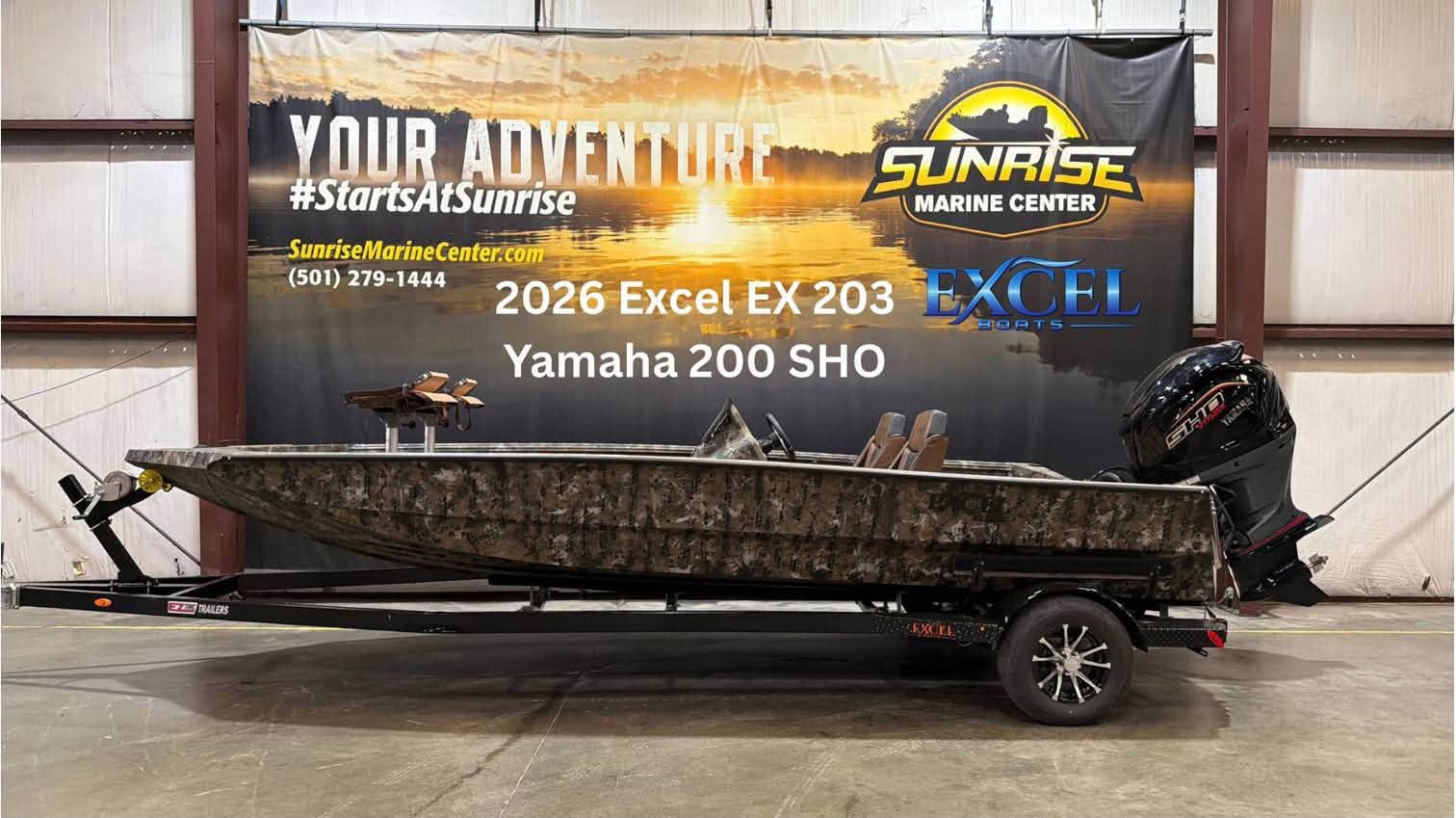

With Arkansas duck season opening Nov. 21 and new AGFC boat-access rules, the Searcy dealership outlines boat selection and preseason service priorities.
SEARCY, AR, UNITED STATES, October 20, 2026 /EINPresswire.com/ — Sunrise Marine Center, a boat dealership in Searcy, Arkansas, is encouraging waterfowl hunters to finalize boat selection, outboard motor service and preseason inspections in the weeks before the 2026-27 Arkansas duck season opens on Nov. 21. The dealership, located at 3207 E. Park Plaza in Searcy, sells new and pre-owned boats and outboard motors and operates a boat repair and service department that performs tune-ups, oil changes, lower unit service, battery replacement, engine installation and repowers.
The timing follows the state’s waterfowl calendar. The Arkansas Game and Fish Commission (AGFC) has set the regular duck, coot and merganser season in three segments: Nov. 21-29, Dec. 10-23, and Dec. 26, 2026, through Jan. 31, 2027. In early October, the AGFC corrected an error in two agency publications that had listed the first segment as ending Dec. 1 rather than Nov. 29, and urged hunters to plan around the corrected dates. With about a month remaining before opening day, late October and early November represent the practical window for identifying and repairing mechanical problems before boats are needed in the field.
Why Arkansas Duck Hunting Demands More From a Boat
Arkansas waterfowl hunting takes place in some of the most demanding boating conditions in the region. Hunters routinely launch well before daylight, run in near-freezing temperatures, and navigate flooded green timber, shallow backwater sloughs, oxbow lakes, rivers, reservoirs and marsh. Submerged stumps, logs, mud flats and rapidly changing water levels are common, and many productive hunting areas are far from boat ramps, roads and reliable cell coverage.
In those conditions, the boat is more than transportation. It is how hunters reach a blind or timber hole in the dark, carry decoys, dogs, firearms and passengers, and leave the water when weather turns or an emergency occurs. An outboard that will not start at the ramp costs a morning hunt. An outboard that quits in flooded timber, miles from the launch in freezing weather, is a safety problem.
Cold water raises those stakes. Waterfowl seasons coincide with the coldest water temperatures of the year, when an unexpected fall overboard can quickly reduce a person’s ability to swim and think clearly. The AGFC has repeatedly identified low life jacket use as one of the largest shortfalls among Arkansas boaters. In its review of 2024 boating accidents, the agency reported that drownings account for most fatalities on Arkansas waters and that in many cases life jackets were on board but not being worn.
Arkansas boating law requires at least one properly fitting U.S. Coast Guard-approved life jacket for every person on board, and children 12 and under must wear a life jacket while a boat is underway. Anyone born on or after Jan. 1, 1986, must complete an AGFC-approved boater education course and carry proof of completion while operating a motorboat. Boats operated at night or in reduced visibility, which describes most pre-dawn duck hunting runs, also need proper navigation lighting.
New AGFC Access Rules Add a Planning Consideration
Hunters choosing a boat this fall also have regulatory changes to consider. In April 2026, the AGFC approved a regulations package that establishes new non-motorized-boat-only access areas on portions of George H. Dunklin Bayou Meto Wildlife Management Area (WMA), Dave Donaldson Black River WMA and Shirey Bay Rainey Brake WMA. All of Galla Creek WMA is now non-motorized access only. The package also prohibits nonresidents from waterfowl hunting on Dave Donaldson Black River WMA during the first segment of the regular duck season, Nov. 21-29, 2026.
A separate proposal to raise the allowable horsepower for surface-drive motors on certain WMAs from 37 to 40 horsepower was tabled by the Commission following public comment. The AGFC has said maps of the new non-motorized access areas will be published on AGFC.com as the season approaches.
For hunters who rely on public land, those rules affect what type of boat and motor makes sense. A hunter who primarily uses an area with motor restrictions may have very different needs than one who runs a large river or reservoir to reach private ground. Reviewing current AGFC regulations for each intended hunting area before purchasing a boat, motor or package helps avoid buying equipment that cannot legally be used where the hunter plans to go.
What to Look for in a Duck Hunting Boat
A purpose-built duck hunting boat is designed around shallow water, heavy loads, obstacles and cold-weather use. Most are aluminum, which tolerates contact with stumps, logs and gravel better than many fiberglass hulls and is easier to repair. Several hull and equipment decisions determine whether a boat fits a specific hunter’s environment.
Hull design is the first consideration. Flat-bottom and jon-style hulls draw very little water, offer a stable platform for standing, shooting and handling decoys, and can reach skinny water in sloughs and flooded timber. Modified-V hulls handle chop on larger rivers and reservoirs more comfortably but typically require more water depth. Hunters who split time between open water and shallow backwaters often weigh those tradeoffs carefully.
Construction and durability matter in timber and stump fields. Hull thickness, welded versus riveted construction, and reinforcement along the bottom and transom affect how a boat holds up to repeated impacts over many seasons.
Stability, storage and capacity determine how well a boat handles a full hunting load. A boat that feels roomy at the dealership can become crowded with two or three hunters, a retriever, several dozen decoys, guns, blind materials and safety gear. Every boat carries a manufacturer’s capacity plate listing maximum persons, total weight and maximum horsepower, and staying within those limits is essential for safe handling in cold water. Dry storage for firearms, electronics and clothing is a practical consideration on wet, cold mornings.
Motor configuration should match the water. Conventional outboard motors are well suited to rivers, reservoirs and open water. In very shallow, stump-filled or vegetated areas, many Arkansas hunters use surface-drive or long-tail motors designed to operate where a standard lower unit could strike bottom. Jack plates, tunnel hulls and propeller choices also influence shallow-water performance. The motor must stay within the boat’s rated maximum horsepower and comply with any limits on the areas the hunter intends to use.
Sunrise Marine Center’s listed brand lineup includes aluminum boat manufacturers War Eagle, Xpress, Excel, SeaArk and G3, along with outboard motors from Yamaha, Mercury, Suzuki and Tohatsu. Model availability changes throughout the year, and buyers can review the dealership’s new and pre-owned boat inventory online or speak with staff about how a particular hull and motor combination fits their hunting environment.
Preseason Maintenance: The Problems That End Hunting Trips
Many mechanical failures that interrupt a hunt develop while a boat sits unused through late summer and early fall. Addressing them before opening day is typically easier, less stressful and less disruptive than handling them after a breakdown at a remote launch.
Fuel-system problems are among the most common. Ethanol-blended gasoline left in a tank for extended periods can absorb moisture, separate and leave deposits that restrict fuel flow. Preseason service often includes inspecting fuel lines, primer bulbs and connections, replacing fuel-water separator filters, and addressing any fuel that has been stored for months.
Batteries and electrical systems are another frequent cause of lost hunting days. Cold temperatures reduce a battery’s ability to deliver starting power, so a battery that performed adequately in September may fail on a 25-degree morning. Load testing, cleaning corroded terminals, and checking wiring, switches, navigation lights, spotlights and bilge pumps before the season reduces the chance of an electrical failure in the dark.
Lower unit and propeller inspections are especially important for boats that run in timber. Striking stumps or debris can bend propeller blades, damage hubs and compromise lower unit seals. Water intrusion often appears as milky or discolored gear oil. Replacing lower unit oil, greasing fittings and inspecting the propeller for damage can reveal problems before they cause a failure.
Cooling-system checks, steering and throttle control inspections, and a general tune-up round out a typical preseason service. Hull welds, rivets and the transom should also be checked for cracks or loosening, particularly on boats that took hard hits during the previous season.
Sunrise Marine Center’s listed service menu includes 20-hour checks, 100-hour service, tune-ups, oil changes, lower unit oil and grease service, battery replacement, same-day basic service, engine installation, repowers, insurance and warranty repair, and outboard winterization. Hunters can request service information through the dealership’s website or by calling (501) 279-1444.
Cold-weather operation also changes post-season and between-hunt routines. Because duck boats are used during the coldest months, owners should take care to let water drain from outboard motors when temperatures drop below freezing, and many owners schedule full winterization after the season closes at the end of January rather than in the fall.
Why Ongoing Service Support Matters After the Purchase
A duck boat represents a significant investment, and much of its long-term value depends on how it is rigged, maintained and repaired. Buying from a marine dealership that also operates a service department gives owners a local resource for rigging questions, scheduled maintenance, warranty and insurance repairs, parts and repowers as a boat ages.
That continuity is particularly useful for hunting boats, which accumulate wear faster than many recreational boats because of stump strikes, cold starts and heavy loads. Technicians who service a boat over multiple seasons can track recurring issues and recommend maintenance based on how the boat is actually used. Sunrise Marine Center also provides online parts-finder and parts-request tools for owners who need replacement components.
Serving Hunters Across Arkansas and the Memphis Region
Searcy is in White County in central Arkansas, northeast of Little Rock, placing the dealership within driving distance of many of the state’s waterfowl hunting regions. Sunrise Marine Center serves duck hunters, anglers and recreational boaters from across Arkansas, including Little Rock, Stuttgart, Jonesboro, Pine Bluff, Hot Springs and Texarkana, as well as the greater Memphis, Tennessee, region.
Those markets represent a wide range of hunting conditions, from the flooded timber and rice country of the Grand Prairie around Stuttgart to the rivers and bottomland hardwoods of northeast and southeast Arkansas. A hunter preparing for big-river conditions near Memphis may need a different hull and motor setup than one hunting shallow timber or a small reservoir. Matching the boat to the hunting environment, rather than selecting a boat on price or appearance alone, is one of the most important decisions a waterfowl hunter makes.
A Preseason Readiness Approach for Arkansas Hunters
For hunters planning their season, a practical preseason approach includes several steps: confirming the corrected AGFC season dates and current regulations for each intended hunting area; scheduling outboard service early enough to allow time for parts and repairs before Nov. 21; testing batteries, lights and bilge pumps; inspecting the propeller, lower unit and hull; checking life jackets for every person who will be aboard; and confirming that every operator born on or after Jan. 1, 1986, has completed boater education.
Hunters shopping for a new or used duck boat can benefit from bringing a clear description of where they hunt, how many people and dogs they typically carry, how much gear they haul, and what access restrictions apply. That information allows a more informed comparison of hull styles, sizes and motor configurations.
About Sunrise Marine Center
Sunrise Marine Center is a boat dealership located at 3207 E. Park Plaza in Searcy, Arkansas. The dealership sells new and pre-owned fishing boats, bass boats, pontoon boats and outboard motors, supplies marine parts and accessories, and operates a boat repair and service department offering tune-ups, scheduled outboard service, lower unit service, battery replacement, engine installation, repowers, warranty and insurance repair, and winterization. Sunrise Marine Center serves boaters, anglers and waterfowl hunters throughout Arkansas and the greater Memphis region. The dealership is open Tuesday through Friday from 8 a.m. to 6 p.m. and Saturday from 8 a.m. to 4 p.m. For more information, call (501) 279-1444 or visit https://www.sunrisemarinecenter.com.
Sunrise Marine Center
+1 501-279-1444
Aaron Barwick
Visit us on social media:
Facebook
YouTube
TikTok
Instagram
Xpress Duck Boat
Legal Disclaimer:
EIN Presswire provides this news content “as is” without warranty of any kind. We do not accept any responsibility or liability
for the accuracy, content, images, videos, licenses, completeness, legality, or reliability of the information contained in this
article. If you have any complaints or copyright issues related to this article, kindly contact the author above.

Media gallery