Plus Size Clothing Market Gains Momentum, Reaching USD 566.82 Billion by 2035
Plus Size Clothing Market is expanding with rising demand for inclusive sizing, fashionable designs, comfortable
Press Release Disclaimer: This is a press release distributed through the XPR Media network. It has not been independently verified by our newsroom.

Plus Size Clothing Market is expanding with rising demand for inclusive sizing, fashionable designs, comfortable apparel, personalized fits & online shopping.
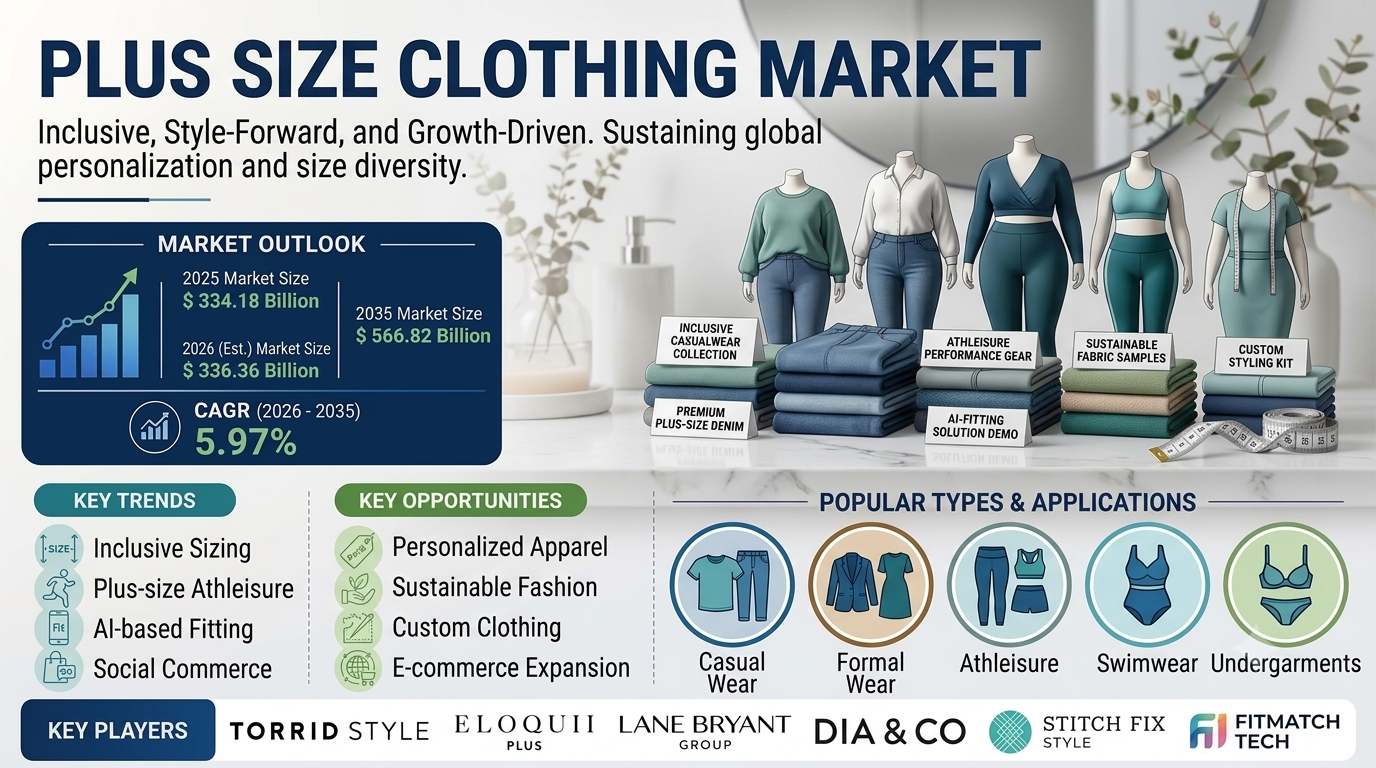
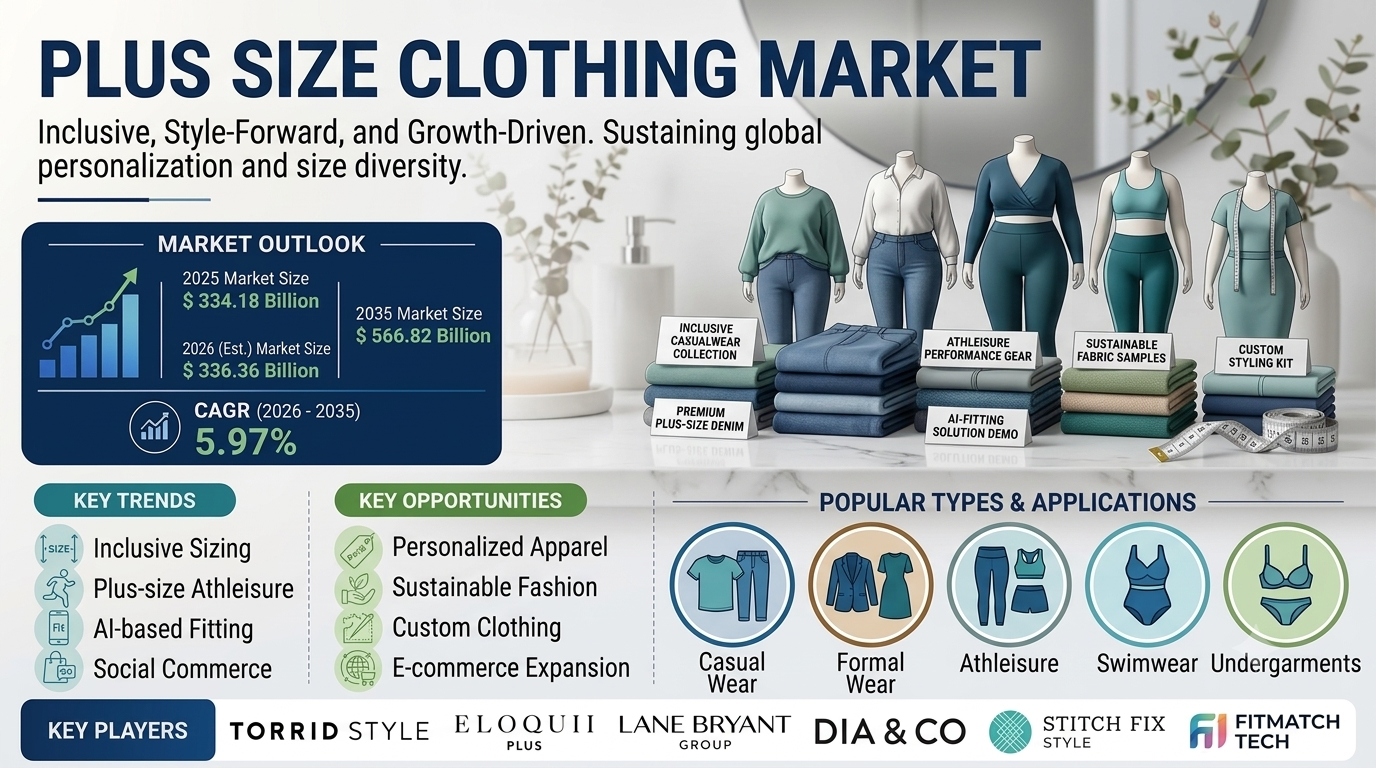
NEW YORK, NY, UNITED STATES, August 27, 2026 /EINPresswire.com/ — The global Plus Size Clothing Market is undergoing a significant transformation as apparel brands, retailers, and fashion platforms increasingly recognize the importance of inclusive sizing. Once treated as a specialized segment, extended-size apparel has become an important part of mainstream fashion, supported by changing consumer expectations, broader representation, improved product design, and the rapid expansion of digital commerce. Plus-size clothing now covers formal wear, casual apparel, sportswear, nightwear, and everyday fashion, providing consumers with greater choice across occasions and lifestyles. According to the report, the global market is estimated to reach USD 334.18 billion in 2025, rise to USD 336.36 billion in 2026, and reach approximately USD 424.17 billion by 2030 and USD 566.82 billion by 2035, advancing at a CAGR of 5.97% during 2026–2035.
The market includes the manufacturing and retailing of apparel designed for consumers requiring extended sizes, ranging from everyday basics and occasion wear to activewear and sleepwear. This diversification is helping brands move beyond the traditional perception of plus-size fashion as a narrow category and develop complete collections offering style, comfort, functionality, and seasonal variety. Consumer expectations are also reshaping competition, with shoppers seeking the same design quality, materials, colors, silhouettes, and fashion trends available across conventional size ranges. As a result, apparel companies are adapting product development, inventory planning, merchandising, and marketing strategies to deliver more inclusive and convenient shopping experiences.
Recent News & Developments:
▪️Old Navy: Continued expanding its inclusive sizing strategy across its retail network, making extended sizes more accessible.
▪️European Commission: Strengthened policy discussions around textile waste, sustainability, and producer responsibility.
▪️Shein: Increased its focus on Curve fashion with expanded collections and improved regional sizing information.
▪️Torrid Holdings: Rebalanced its physical store footprint while developing stronger digital fulfillment capabilities.
▪️NIKE: Broadened extended-size options within selected activewear and performance-focused product lines.
▪️H&M Group: Investigated AI-driven sizing solutions to help shoppers select better-fitting apparel online.
▪️ASOS: Updated its Curve merchandise strategy to improve demand forecasting and inventory management.
▪️Marks & Spencer: Invested in improved womenswear fit standards using consumer body-measurement research.
Rising Demand for Inclusive Fashion:
Growing demand for fashion inclusivity is a major factor shaping the industry, as consumers increasingly expect brands to cater to diverse body shapes and offer broader size ranges. This shift is encouraging established retailers and emerging companies to develop dedicated plus-size collections with improved fit, comfort, fabric selection, proportions, and garment construction. Rather than simply extending existing sizes, brands are focusing on designs specifically suited to different body types.
Representation is also strengthening the segment through diverse models, social media campaigns, influencer partnerships, and user-generated content. Greater visibility is helping normalize plus-size fashion while encouraging consumers to explore brands that match their style preferences. Retailers offering reliable sizing, attractive designs, consistent fit, and convenient shopping experiences can strengthen customer satisfaction, encourage repeat purchases, and build long-term loyalty.
Plus Size Clothing Market Segmentation:
▪️By Product Type:
Casual wear leads due to broad everyday demand and comfortable fits.
Sportswear is expanding rapidly, supported by athleisure trends, stretch fabrics, and rising fitness participation. Formal wear and nightwear also offer opportunities through demand for stylish, comfortable, and occasion-specific apparel.
▪️By End User:
Men hold a leading position, supported by established big-and-tall retail networks.
Women are witnessing strong growth as brands expand inclusive sizing, designer collaborations, and fashion-focused collections.
Unisex apparel is also gaining traction through streetwear and oversized styles.
▪️By Price Range:
Mass-market apparel dominates due to affordability, accessibility, and broad product availability.
Premium and luxury segments are gaining momentum as consumers seek higher-quality fabrics, better fit, exclusive designs, and inclusive designer collections.
▪️By Distribution Channel:
Offline retail remains important because physical stores provide immediate availability and greater confidence in fit.
Online retail is expanding rapidly, supported by wider assortments, social commerce, virtual fitting tools, convenience, and personalized shopping experiences.
Product Innovation Strengthens Market Opportunities:
Product innovation is creating new opportunities in plus-size apparel as consumers seek fashionable clothing for work, social events, travel, fitness, leisure, and everyday use. Demand is expanding across formal wear, casual clothing, sportswear, activewear, and nightwear, encouraging brands to develop products that combine style, comfort, fit, functionality, and durability. Activewear is particularly gaining attention as consumers prioritize wellness and physical activity, increasing demand for supportive, breathable, stretchable, and performance-focused garments.
Technology is also transforming plus-size product development. Digital body measurement, virtual fitting, data analytics, and artificial intelligence can help brands understand customer preferences, improve garment fit, and reduce sizing-related uncertainty and returns. Retailers that provide diverse collections across multiple apparel categories can strengthen customer engagement and encourage repeat purchases. These innovations are helping brands create more personalized and convenient shopping experiences while expanding opportunities within the segment.
Get Full PDF Sample Copy of Report: (Including Full TOC, List of Tables & Figures, Chart) @
https://www.marketresearchfuture.com/sample_request/20671
Competitive Landscape:
The Plus Size Clothing Market includes global apparel companies, specialist retailers, online fashion platforms, sportswear brands, and established fashion groups. Competition increasingly revolves around product variety, sizing consistency, design quality, pricing, digital experience, brand positioning, and customer loyalty.
Key companies profiled in the report include:
▪️Inditex
▪️H&M Group
▪️Shein
▪️Fast Retailing
▪️Gap Inc.
▪️NIKE
▪️adidas
▪️Torrid Holdings
▪️FullBeauty Brands
▪️ASOS plc
▪️Marks & Spencer
▪️City Chic Collective.
Large international apparel groups benefit from extensive retail networks, manufacturing capabilities, established brands, and significant marketing resources. Their ability to introduce inclusive sizing across broad collections can help them reach larger consumer audiences. Meanwhile, specialist companies can compete through focused expertise in fit, community engagement, customer service, and product specialization.
Online-first fashion platforms are also influencing competitive dynamics. Their broad assortment and data-driven merchandising models allow them to react quickly to consumer trends. However, maintaining consistent sizing and quality across extensive product catalogs remains an important challenge.
Sportswear companies are expanding the competitive field by addressing demand for inclusive activewear. Performance-focused apparel requires specialized construction, meaning companies that successfully combine technical performance with inclusive sizing can access additional consumer segments.
Market Opportunities:
Product innovation is expanding opportunities in the plus-size apparel segment as consumers seek stylish clothing for work, social occasions, travel, fitness, leisure, and everyday use. Demand is growing across formal wear, casual apparel, sportswear, activewear, and nightwear, encouraging brands to focus on improved fit, comfort, functionality, stretch, support, and contemporary designs. Retailers are increasingly developing complete collections that address diverse consumer needs rather than limiting offerings to basic garments.
Technology is also supporting innovation through digital body measurement, virtual fitting, data analytics, and AI-based sizing solutions. These tools can help brands improve product fit, understand customer preferences, personalize recommendations, and minimize sizing-related returns in online shopping. As product variety and technology adoption increase, brands have greater opportunities to strengthen customer engagement and deliver more convenient shopping experiences.
Online Retail Becomes a Major Distribution Engine:
E-commerce is transforming plus-size clothing distribution by giving consumers access to broader assortments, sizes, styles, colors, and designs beyond local store inventories. Online retailers also provide size charts, garment measurements, customer reviews, fit details, images, videos, and styling guidance, helping shoppers make more confident purchasing decisions.
Social commerce, influencers, livestreams, and personalized recommendations are further increasing online engagement by showcasing products across diverse body types. At the same time, retailers are using customer data and AI-driven tools to improve product recommendations and sizing accuracy. Addressing inconsistent sizing and fit-related returns remains essential for building consumer trust and improving the profitability of online apparel sales.
Social Media Accelerates Fashion Discovery:
Social media is reshaping how consumers discover plus-size fashion, compare brands, and follow emerging trends. Short-form videos, visual posts, creator collaborations, reviews, and styling content allow shoppers to see apparel on diverse body types before making purchasing decisions. Influencers and content creators can reduce uncertainty by sharing practical insights about garment fit, fabric stretch, sizing accuracy, comfort, and styling options. This real-world content helps consumers understand how products may look and perform beyond traditional studio photography.
User-generated content further strengthens brand trust by providing authentic customer experiences through photographs, reviews, and product demonstrations. Positive interactions can encourage engagement, repeat purchases, and stronger connections between consumers and apparel brands. Social platforms are also creating opportunities for smaller and specialized plus-size fashion companies to reach targeted audiences without depending heavily on conventional advertising. Through niche communities, creator partnerships, interactive campaigns, and personalized content, emerging brands can establish distinctive identities and respond directly to consumer preferences. As social commerce continues to evolve, its combination of discovery, inspiration, peer recommendations, and direct purchasing is expected to remain an important channel for expanding awareness and supporting sales of plus-size apparel.
Regional Market Development:
Regional demand for plus-size clothing is influenced by consumer preferences, purchasing power, retail infrastructure, cultural attitudes, and e-commerce adoption. North America remains a key region, supported by established retailers, strong online shopping penetration, and growing expectations for inclusive sizing across casual and occasion wear. Europe is also progressing through omnichannel retail, fashion innovation, sustainability efforts, and increasing attention to diverse representation.
Asia-Pacific offers significant long-term opportunities due to its large consumer base, expanding digital commerce, urbanization, and rising fashion awareness. Brands increasingly need to adapt sizing and designs to local body proportions and preferences. Meanwhile, emerging markets can benefit from greater access to international brands, mobile commerce, and social media-driven fashion discovery, creating new pathways for plus-size apparel adoption and retail expansion.
Key Challenges Affecting Industry Development:
The plus-size clothing industry faces several challenges that can influence future development. Achieving consistent fit across diverse body shapes requires specialized pattern development, extensive fit testing, and greater design expertise, as simply scaling standard garments may result in poor proportions or limited comfort. Inventory management is another concern because offering more sizes, colors, and styles increases forecasting and stock-planning complexity. Retailers must balance product availability with the risk of excess inventory and markdowns. Production costs can also rise due to specialized materials, additional development requirements, and smaller production runs, making it important for brands to maintain competitive pricing without compromising quality.
Online returns remain another major challenge, particularly when customers face inconsistent sizing between brands or limited information about garment fit. Retailers can address this through clearer measurement guides, virtual fitting tools, detailed product descriptions, and improved sizing systems. Competition is also increasing as mainstream fashion companies expand their inclusive collections and specialist brands seek to protect their customer base. To remain competitive, companies may need to focus on distinctive designs, reliable fit, product quality, personalized experiences, and stronger relationships with consumers. Efficient supply-chain planning, accurate demand forecasting, and technology adoption can further help brands manage operational challenges while improving customer satisfaction and reducing unnecessary costs.
Emerging Opportunities:
The evolving plus-size apparel industry offers opportunities for brands to develop complete lifestyle collections spanning workwear, casualwear, activewear, occasion wear, outerwear, and sleepwear. Personalization is another promising area, with digital platforms using customer preferences, purchase history, and body measurements to recommend suitable sizes and styles. Made-to-order and customized production can further help retailers manage inventory while offering consumers more individualized products. Flexible manufacturing can reduce the need to stock every size and style combination, improving operational efficiency.
Collaborations with plus-size designers, influencers, stylists, and content creators can help brands improve product relevance and strengthen market visibility. Community-driven product development can also provide valuable insights into unmet consumer needs and preferences. Sustainable fashion presents another opportunity as companies explore durable materials, responsible sourcing, repair services, recycling programs, and longer-lasting garments. Combining inclusive design with sustainability, customization, and technology can help brands build stronger customer relationships while creating differentiated and future-ready product offerings.
Future Outlook:
The Plus Size Clothing Market has a positive outlook as inclusive sizing becomes increasingly integrated into mainstream fashion. The market is projected to expand from USD 334.18 billion in 2025 to USD 566.82 billion by 2035, creating opportunities across product categories and distribution channels. Future competition will increasingly center on fit, design, affordability, comfort, convenience, and authentic representation rather than size availability alone. Brands that understand diverse body shapes and consumer preferences can strengthen customer loyalty and differentiation.
Technology will play a key role through AI-powered recommendations, virtual fitting, digital measurements, personalized merchandising, and data-driven inventory planning. Meanwhile, physical stores are expected to remain relevant as retailers adopt omnichannel strategies that connect online discovery with in-store experiences. As consumer expectations continue to evolve, companies that make inclusivity a core part of product development, technology, and retail strategy will be better positioned for sustainable long-term expansion.
Frequently Asked Questions?
What is the Plus Size Clothing Market?
The Plus Size Clothing Market covers the manufacturing and retailing of apparel designed in extended sizes across categories such as casual wear, formal clothing, sportswear, nightwear, and other apparel products.
What is driving demand for plus-size clothing?
Growing demand for inclusive fashion, broader body representation, changing consumer expectations, product innovation, social media influence, and expanding online retail are important factors supporting demand.
How is e-commerce influencing plus-size fashion?
Online platforms provide broader product selections, detailed sizing information, customer reviews, personalized recommendations, and convenient purchasing options, making extended-size apparel more accessible.
What is the outlook for the Plus Size Clothing Market?
The market is projected to expand steadily through 2035, supported by inclusive product development, digital commerce, omnichannel retailing, technological innovation, and changing consumer preferences.
Discover More Research Reports By Market Research Future:
Sports Sponsorship on Apparel Clothing Accessories Market:
https://www.marketresearchfuture.com/reports/sports-sponsorship-on-apparel-clothing-accessories-market-16094
Athleisure Clothes Market:
https://www.marketresearchfuture.com/reports/athleisure-clothes-market-21385
Cooking Gloves Market:
https://www.marketresearchfuture.com/reports/cooking-gloves-market-39904
Childrenswear Market:
https://www.marketresearchfuture.com/reports/childrenswear-market-16100
Apparel Leather Products Market:
https://www.marketresearchfuture.com/reports/apparel-leather-products-market-12387
Market Research Future
Market Research Future
+1 855-661-4441
email us here
Legal Disclaimer:
EIN Presswire provides this news content “as is” without warranty of any kind. We do not accept any responsibility or liability
for the accuracy, content, images, videos, licenses, completeness, legality, or reliability of the information contained in this
article. If you have any complaints or copyright issues related to this article, kindly contact the author above.

Media gallery